
Best overall for receiving USD and EUR and managing business money: Zeam, subject to verification and route approval. Best for guests paying by card: a card-payment provider. Best for coordinating booking payments: a booking system with payment functionality. This 2026 guide helps South African tour operators and safari businesses choose the right collection method without confusing payment receipt with booking management.
- For the international payment platform for south africa business shortlist, assess Zeam for USD and EUR receipts.
- Choose card acceptance when international guests need to pay by card; receiving details do not replace it.
- Match overseas deposits and balance payments to local supplier commitments before choosing a collection method.
- Complete business verification and confirm eligible payment routes before sending guests receiving instructions.
Why this matters
An overseas booking creates separate jobs: collecting the guest’s deposit, collecting the balance and paying the businesses delivering the trip. A platform that handles one job does not automatically handle the others.
For your 2026 payment setup, start with the booking rather than the provider’s feature list. A European travel agent paying an invoice in EUR needs different instructions from an individual guest who wants to pay by card.
Zeam is best for tourism businesses that need USD and EUR receiving details alongside multi-currency money management. It is not a bank, and its digital balances are not bank deposits.
What makes the best international payment platform?
Use these criteria before comparing providers. The right choice must work for both your guest’s payment method and your supplier commitments.
- Guest payment method: Can the guest use receiving details, or do they need card checkout? Ask before issuing payment instructions.
- Receiving currency and route: Confirm the currency, payer origin and payment route for the actual booking. A currency balance alone does not establish route eligibility.
- Booking reconciliation: You need to match each receipt to a guest, invoice, departure and outstanding balance.
- Supplier payments: Check how you will pay local accommodation providers, guides and transport businesses. Confirm any plan restrictions affecting other payouts.
- Verification and controls: Establish what approval is required, who can access money and who can authorise payments.
- Money status: Understand whether you hold a bank deposit or a digital balance. Treat that distinction as a selection criterion, not small print.
Your 2026 options at a glance
This shortlist ranks payment approaches by their role in a tourism business. It does not treat receiving details, card acceptance and booking software as interchangeable products.
| Option | Best for | Standout capability | Key limitation |
|---|---|---|---|
| Multi-currency receiving platform | USD and EUR receipts plus business money management | Named receiving details and multiple currency balances, where supported | Verification, eligible routes and plan conditions need checking |
| Card-payment provider | Guests who want to pay by card | Card-based payment collection | Currency handling, disputes and settlement conditions depend on the provider |
| Booking system with payments | Linking collection to reservation administration | Booking and payment information connected in the workflow | Payment functionality varies; money-management tools need separate checking |
| Business bank account receiving transfers | Businesses that specifically require bank deposits | Receipt through the business’s bank account | Overseas receiving and conversion capabilities depend on the bank and account |
1. Zeam: best for USD and EUR booking receipts
Zeam is an international payment platform for businesses receiving USD and EUR from US and European clients using receiving details in the business’s name. You can hold multiple currency balances, convert when needed and pay suppliers locally.
For a safari operator, that creates a practical connection between overseas booking receipts and business money management. Payment links, records, accounting integrations and team approvals are also part of the stated product scope; confirm the relevant functionality for your account before building a workflow around it.
Pros:
- Receive USD and EUR using receiving details in your business’s name.
- Hold multiple currencies rather than treating receipt and conversion as the same decision.
- Manage local supplier payments alongside payment records and team approvals.
- Add treasury tools, including cash-flow forecasting and automated transfers, as the business grows.
Cons:
- Digital balances are not bank deposits; the provider is not a bank.
- International and bulk payments are on higher plans.
- Receiving details do not establish that every guest, country or payment route is eligible.
Best for: Tour operators and safari businesses receiving overseas invoice payments and managing the resulting business funds.
Verdict: Buy only after business verification and confirmation that your required receiving and payout routes are approved.
2. Card-payment providers: best for card-paying guests
A card-payment provider handles a different requirement: your guest wants to pay with a card rather than arrange a transfer. Choose this route when card acceptance is part of the booking experience you need to offer.
Assess the actual checkout and settlement arrangement, not just the presence of a card logo. Confirm accepted cards, payment currencies, settlement arrangements, refund handling and dispute procedures with the provider.
Card-payment provider pros:
- Matches the needs of guests who explicitly request card payment.
- Provides a collection method distinct from receiving-account instructions.
- Can sit alongside an invoice-based transfer option in your payment policy.
Card-payment provider cons:
- Card acceptance does not establish that you can hold USD or EUR balances.
- You must understand the provider’s dispute and refund process.
- A successful checkout does not replace booking reconciliation or supplier-payment planning.
Best for: Tourism businesses whose overseas guests need card checkout.
Verdict: Buy for a verified card-acceptance requirement; do not assume a receiving platform replaces it.
3. Booking systems with payments: best for reservation coordination
A booking system with payment functionality connects collection to the reservation workflow. Assess this approach when your main problem is knowing which booking has paid, which balance remains due and what your team should do next.
Check the specific system rather than assuming all booking software collects payments. Establish which payment provider processes the transaction and where the money goes after collection.
Booking system pros:
- Puts reservation administration at the centre of the payment workflow.
- Gives you a place to assess deposit and balance-payment processes together.
- Supports a selection process based on how your team actually manages bookings.
Booking system cons:
- Payment methods and payment-provider connections vary by system.
- Booking functionality does not establish multi-currency holding or supplier-payment capability.
- You still need to check the underlying payment provider’s conditions.
Best for: Operators whose payment problem starts with disconnected booking administration.
Verdict: Buy for reservation coordination after confirming the underlying collection method; skip it as a substitute for treasury tools.
4. Business bank accounts: best when bank deposits are required
A business bank account is the option to assess when your requirement specifically includes holding bank deposits. Ask the bank how the account receives overseas business payments and what happens to an incoming foreign-currency payment.
For a tour operator, the important question is not simply whether an overseas guest can send money. You also need usable receiving instructions, clear conversion conditions and a reliable way to identify the booking being paid.
Business bank account pros:
- Addresses the requirement for bank deposits rather than digital balances.
- Provides a bank-account route to assess for invoice payments.
- Lets you evaluate international receipt alongside your existing business banking needs.
Business bank account cons:
- Foreign-currency receiving and holding depend on the particular account.
- A bank account does not by itself provide a booking system or card checkout.
- Incoming-payment requirements and conversion arrangements need checking directly.
Best for: Businesses whose account requirements specifically call for bank deposits.
Verdict: Buy for the banking requirement after confirming the overseas receiving arrangement; skip assumptions based on the account name alone.
Build the payment workflow around the booking
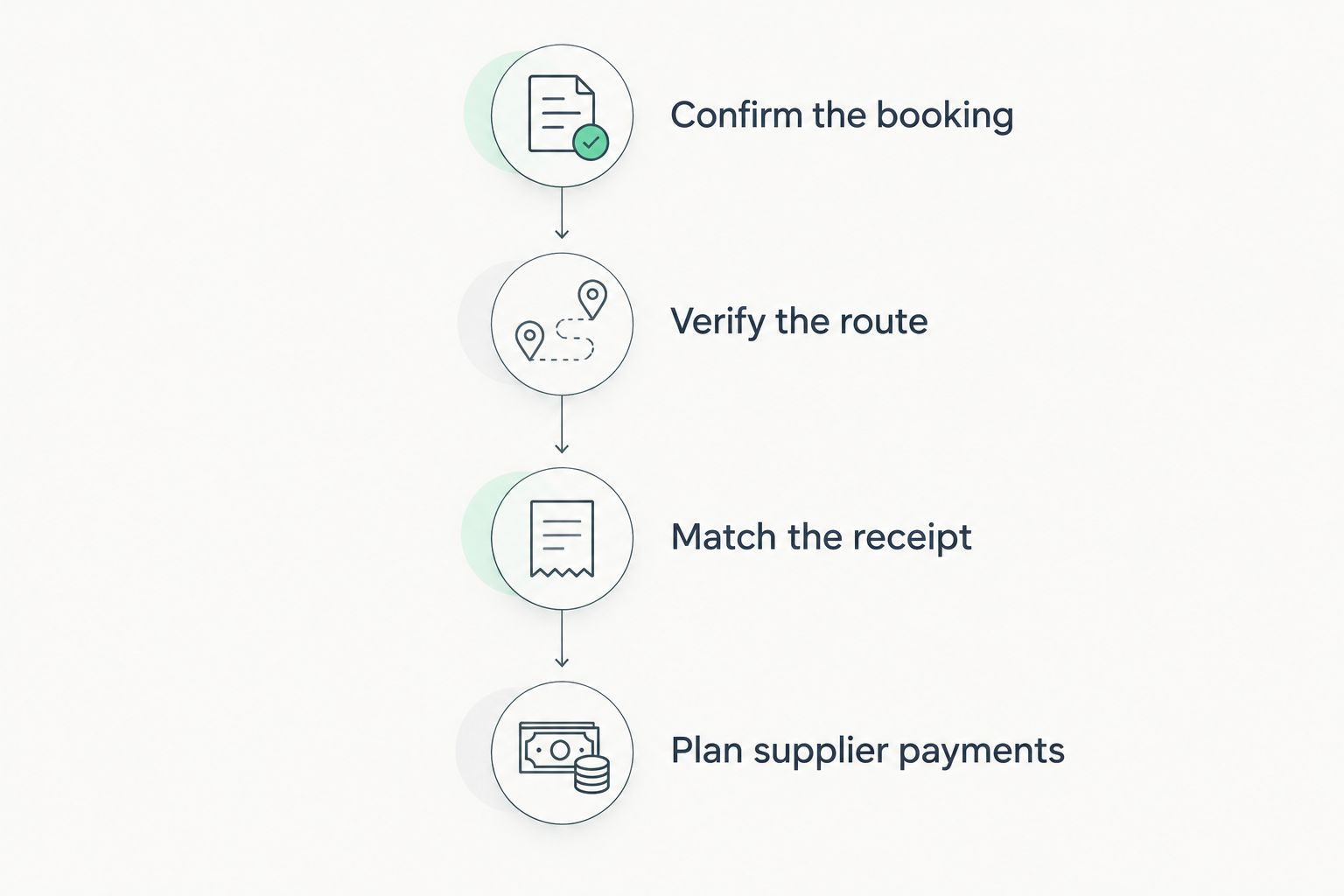
Use 2 payment stages: deposit and balance as a planning template when your booking terms use staged payments. Then connect those stages to supplier commitments rather than treating every incoming payment as money available for any purpose.
Confirm the booking
Record the contracting customer, invoice currency, deposit requirement and balance deadline. Distinguish an overseas travel agent paying on behalf of guests from an individual guest paying directly.
Ask which payment method the payer intends to use. This prevents sending transfer instructions to someone expecting card checkout.
Verify the route
Complete account verification and confirm the proposed payment route before requesting funds. Check the payer’s origin, receiving currency and any conditions attached to the account or plan.
If you apply for a Zeam business account, make verification and route confirmation part of setup, not a task left until the first deposit is due. Do not promise a guest a payment route that has not been confirmed.
Match the receipt
Use a consistent booking reference and check the payment record against the invoice. Record the amount received, currency and remaining balance before updating the booking’s payment status.
Keep 3 records together: the invoice, receipt and supplier bill. This is a working checklist, not a claim that one platform automatically connects every record.
Plan supplier payments
For a EUR booking with local supplier costs, identify when those costs fall due before deciding when to convert. The same principle applies to a USD balance payment arriving ahead of a departure.
Separate money already committed to accommodation, guides or transport from money available for other operating costs. Confirm payout approval and plan conditions before scheduling payments.
How this shortlist is ranked
The 2026 ranking starts with payment-method fit, then receiving currency, reconciliation, supplier payments, controls and money status. Those criteria explain why there is no universal winner across every booking situation.
No provider wins a budget category here. Compare the complete receiving, conversion, payout and refund conditions for your actual workflow rather than inferring value from a single advertised feature.
The default recommendation serves an invoice-led USD or EUR workflow. Card collection wins a separate use case, while booking software addresses reservation administration and a bank account addresses a banking requirement.
Which option should you choose?
For your 2026 setup, choose the collection method your payer can actually use, then choose how you will manage the money. Those decisions belong together, but they are not identical.
Start with the multi-currency receiving option when overseas clients pay USD or EUR invoices and you need to manage balances and local supplier payments. Add or retain card acceptance when guests need it; keep booking software responsible for reservations unless verified functionality supports something more.
Before applying, write down the receiving currencies, payer locations, supplier destinations and approval roles your business needs. Use that list to confirm suitability rather than buying a broad feature description.
Check your business account fit
Review receiving and money-management options, then apply and complete verification.
FAQ
What is the best international payment platform for a South African tour operator?
Zeam is the shortlist choice for a tour operator seeking USD and EUR receiving details alongside multi-currency business money management. Complete verification and confirm the specific receiving and payout routes before requesting guest payments.
Can I receive a booking deposit in EUR and pay local suppliers?
Yes, Zeam’s stated functionality includes EUR receipts, multiple currency balances, conversion and local supplier payments. Confirm account approval and the relevant payment route before using that workflow for a booking.
Do receiving details replace card payments for overseas guests?
No, receiving details do not establish card acceptance. Keep a verified card-payment option when your guests need to pay by card, and check how each method fits your booking process.
Is a payment link the same as card checkout?
No, a payment link alone does not identify the underlying payment method. Confirm what the guest can use after opening the link, which provider processes the payment and how the receipt reaches your business.
Should I collect the deposit and balance through the same method?
Use the same method when it fits both payments and your booking terms. If the guest changes method, preserve the booking reference and reconcile both receipts against the same invoice history.
Are digital balances the same as bank deposits?
No, digital balances are not bank deposits. Check the provider’s legal terms and money-holding arrangements rather than assuming an account-like interface creates a banking relationship.
What should I check before choosing a platform in 2026?
Check business verification, eligible receiving routes, payment currencies, conversion conditions, supplier payouts and approval controls. Also confirm whether you need separate card acceptance or booking software.
One last thing
A payment confirmation and an available supplier budget answer different questions. The first tells you what arrived; the second requires you to account for the booking’s outstanding obligations.
Before marking a deposit as available operating money, attach it to the booking and list the supplier commitments it must cover. That simple discipline matters whichever collection method you choose.