
Best overall for receiving overseas booking payments and managing business money: Zeam. Best for early-stage forecasting: a cash-flow spreadsheet. Best for financial records: accounting software. This 2026 guide compares treasury management tools for African businesses, with South African tour operators and safari businesses as the practical starting point.
- Zeam leads treasury management tools for African businesses needing USD and EUR receipts alongside supplier payments.
- Use cash-flow forecasting to connect booking deposits, balance payments and supplier commitments.
- Keep card acceptance and booking management separate unless a verified integration connects them.
- Complete account verification and check payment routes before issuing receiving instructions to overseas guests.
Why this matters
An overseas booking deposit is not the same as money available to spend. A safari operator must still cover accommodation, transport and other supplier commitments while keeping track of the guest’s remaining balance.
Your treasury setup should connect those obligations to the money you actually hold. Choose around the booking-payment cycle, not the longest feature list. For a South African tourism business in 2026, the useful question is whether you can collect, track, convert and allocate money without losing sight of upcoming commitments.
What makes the best treasury management tools?
- Receiving fit: Can your business receive the currencies its overseas clients use, through an approved route?
- Currency control: Can you distinguish money held in different currencies from money converted for local expenses?
- Payment control: Can the right person approve supplier payments before money leaves?
- Forecasting: Can you connect expected booking receipts with dated supplier obligations?
- Records: Can you match receipts and payments to bookings and accounting records?
- Account suitability: Are verification requirements, account terms and the treatment of balances clear?
Treasury management tools at a glance
These are different tool types, not interchangeable accounts. The ranking prioritises a growing tourism business’s collection and money-management needs; your existing systems determine which supporting tools belong alongside the main account.
| Tool | Best for | Standout function | Key limitation |
|---|---|---|---|
| Zeam | Overseas receipts and business money management | USD and EUR receiving details in the business’s name, with multiple currency balances | Digital balances are not bank deposits; routes and approval conditions need checking |
| Cash-flow spreadsheet | Early-stage booking cash planning | A custom view of guest receipts and supplier commitments | Manual updates do not confirm that money has arrived |
| Accounting software | Bookkeeping and reconciliation | Connecting transaction records with the books | Recording a payment does not itself collect or move money |
| Bank treasury portal | Managing existing bank-held funds | Access to the bank’s supported business payment and account functions | Currency, receiving and approval capabilities depend on the bank |
| Card payment platform | Guests who want to pay by card | Card acceptance through a supported checkout or payment link | Card collection alone does not provide a complete treasury workflow |
1. Zeam: best for overseas receipts and business money management
Best for: Growing tourism businesses that need to receive USD and EUR from US and European clients, hold multiple currency balances and pay local suppliers.
The platform provides receiving details in your business’s name and lets you convert balances when needed. Its stated functions also include payment links, payment records, accounting integrations and team approvals, with cash-flow forecasting and automated transfers available as businesses grow.
For a safari operator, the relevant workflow is straightforward: receive an overseas booking payment, record what it covers, and plan local supplier payments. International and bulk payments sit on higher plans, so check the required plan before building either into your process.
Zeam pros:
- USD and EUR receiving details use the business’s name.
- Multiple currency balances support holding and converting funds when needed.
- Local supplier payments and team approvals address business spending needs.
- Forecasting and automated transfers extend the money-management workflow.
Zeam cons:
- It is not a bank; balances are digital balances rather than bank deposits.
- International and bulk payments require higher plans.
- Business eligibility, approval and the intended payment route need confirmation before use.
Apply for a business account and complete verification before sharing receiving instructions. Do not treat payment links as proof of card acceptance or assume the account replaces your booking system.
Verdict: Hold until verification and route checks are complete; then use it as the main receiving and business money-management tool where approved.
2. Cash-flow spreadsheet: best for early-stage booking cash planning
Best for: An owner who needs a clear forecast before adding more specialised treasury software.
A cash-flow spreadsheet puts expected guest receipts beside supplier commitments. Build it around booking references, currencies, due dates and the actual status of each payment rather than a single total balance.
For example, keep a guest’s deposit separate from their outstanding balance, then list the accommodation and transport payments attached to that booking. A forecast becomes useful when it shows the gap between when money is expected and when suppliers need payment.
Cash-flow spreadsheet pros:
- You can organise the forecast around your own booking stages.
- Expected receipts and supplier obligations can share one planning view.
- You can keep currencies separate rather than mixing unlike balances.
Cash-flow spreadsheet cons:
- Manual entries become unreliable when nobody owns the updates.
- A forecast entry does not prove receipt or execute a payment.
Assign an owner and update the sheet whenever a booking changes, a payment arrives or a supplier commitment moves. Keep planned conversion amounts separate from confirmed converted amounts.
Verdict: Hold as a planning companion, not as a substitute for receiving accounts or payment records.
3. Accounting software: best for bookkeeping and reconciliation
Best for: A tourism business that needs receipts, expenses and booking records to agree with its books.
Accounting software serves a different purpose from a receiving account. Use it to maintain the financial record, then confirm that the chosen package supports your required currencies, transaction imports and reconciliation process.
For a tour operator, the key task is matching a receipt to the correct booking and recording what remains outstanding. Supplier payments need the same discipline: the payment record should connect to the relevant bill or supporting document.
Accounting software pros:
- It gives bookkeeping a defined home outside the booking inbox.
- Reconciliation helps identify receipts and payments that need investigation.
- Records can support an accountant’s review of business transactions.
Accounting software cons:
- Currency handling and integrations differ between products.
- Bookkeeping does not replace payment collection or cash-flow forecasting.
Ask for a demonstration using your actual workflow: an overseas deposit, a later balance payment and a local supplier bill. Check how corrections are recorded, not just how a clean transaction looks.
Verdict: Buy when the package supports your accounting requirements and the payment-record workflow has been checked.
4. Bank treasury portal: best for managing existing bank-held funds
Best for: A business whose existing bank supports the currencies, payment routes and controls it needs.
A bank treasury portal is a way to manage the business banking functions the bank provides. Assess its actual account and payment capabilities rather than assuming that a business banking login includes specialist treasury features.
For a South African safari business, ask how an overseas receipt reaches the account, what information accompanies it and how local supplier payments are approved. Check those steps against the booking workflow before relying on the portal for international collection.
Bank treasury portal pros:
- It can keep management of existing bank accounts within the bank’s own interface.
- Supported payment functions can serve established supplier-payment processes.
- Available account records can support reconciliation.
Bank treasury portal cons:
- Currency accounts, international receiving details and approval controls vary by bank.
- A bank portal does not automatically connect guest bookings with supplier obligations.
In 2026, evaluate the exact service offered to your business, not a general description of corporate banking. Confirm account terms and payment routes directly with the bank.
Verdict: Hold until the bank confirms the receiving, currency and approval functions your business requires.
5. Card payment platform: best for guests who want to pay by card
Best for: A tour operator that needs a supported card-payment route for overseas guests.
A card payment platform addresses collection rather than the whole treasury process. Depending on the provider’s supported functions, your business can offer card checkout or a card-enabled payment link, then reconcile the resulting receipts against bookings.
Do not confuse a payment link with a payment method. Confirm what the link actually accepts, how your business receives the funds, and what the provider requires for refunds and disputes.
Card payment platform pros:
- It gives guests a card-payment option where supported.
- A supported payment link can direct guests to the collection step.
- Transaction records can help match payments with booking references.
Card payment platform cons:
- Card collection does not by itself manage supplier commitments or cash forecasts.
- Settlement, refunds, disputes and supported currencies depend on the provider and route.
Check the customer-facing payment experience alongside the back-office record. Your team needs to identify the booking without relying on a guest’s screenshot or email confirmation.
Verdict: Buy where card acceptance is required and the provider’s collection and settlement conditions fit your business.
Build the booking-payment workflow before adding tools
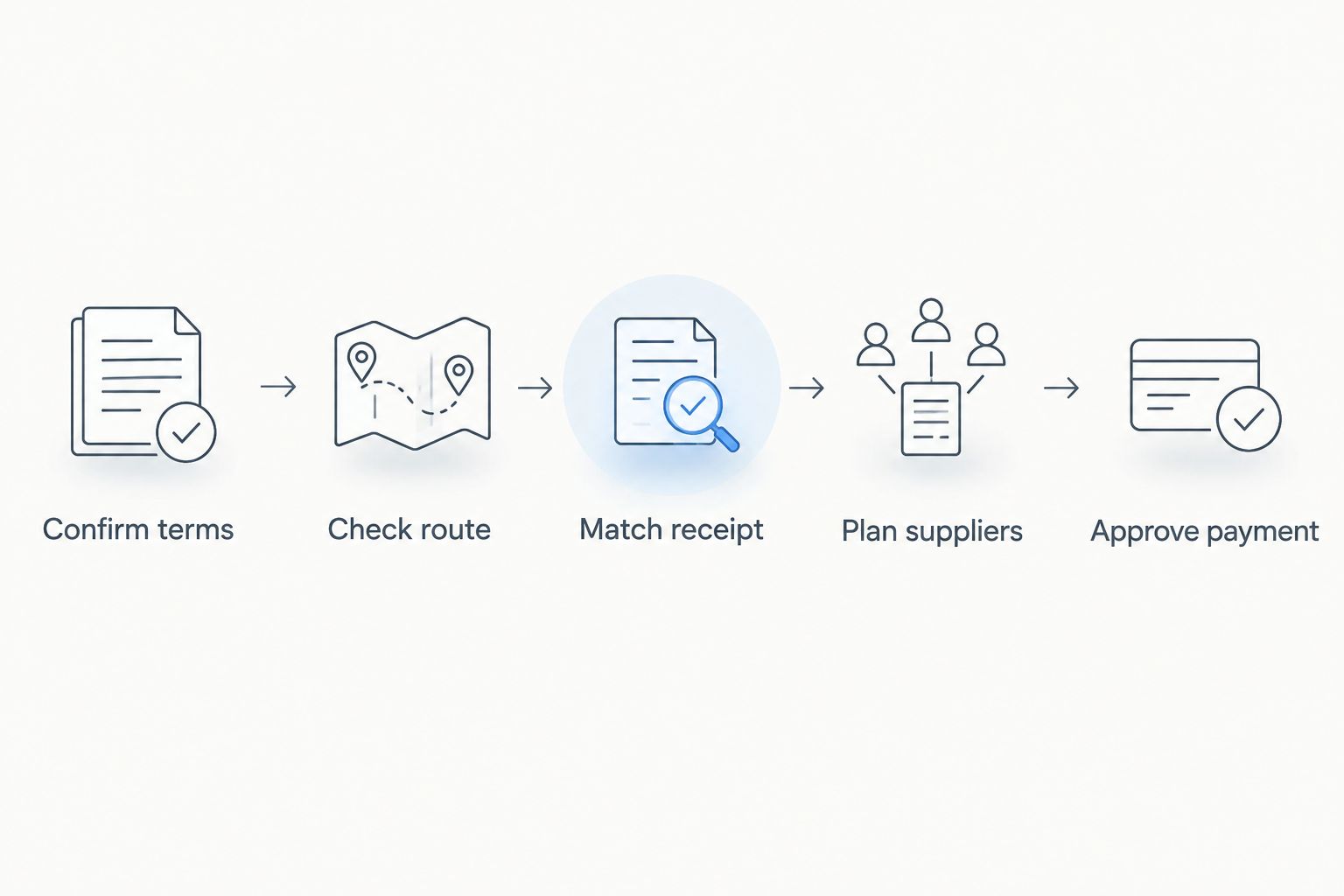
For your 2026 setup, write down how an overseas booking moves from agreement to supplier payment. The following sequence keeps the collection decision connected to the cash you need for delivery.
- Confirm terms: Record the booking currency, deposit requirement, balance deadline and cancellation terms agreed with the guest.
- Check route: Confirm business approval, receiving instructions and the payment method before requesting payment.
- Match receipt: Verify the receipt in the receiving account or payment platform and match it to the booking reference.
- Plan suppliers: Record supplier commitments separately from the guest’s outstanding balance. Identify the currency needed for each payment.
- Approve payment: Check the recipient, amount, currency and supporting record before releasing funds.
The sequence separates expected money from received money and received money from money committed to suppliers. Keep those distinctions visible even when the same person handles bookings and finance.
Check the account before requesting a deposit
Complete business-account verification before sending new receiving instructions to guests. Confirm the intended sender, currency and payment route, and check which features require a particular plan or further approval.
Keep an existing collection method in place until the new route is approved and your team understands the records. An application is not permission to promise a guest that a particular payment will work.
Apply for a business account
Complete verification and confirm your receiving route before requesting overseas booking payments.
How the tools are ranked
The ranking follows the criteria above: receiving fit, currency control, payment control, forecasting, records and account suitability. It prioritises the stated needs of growing tourism businesses receiving overseas booking payments.
This is a workflow-based comparison, not a measured performance test. Supporting tool categories rank by the job they solve; they are not claims that every product in a category has identical features.
Which treasury management tools should you choose?
Start with an approved receiving and money-management account, then fill the specific gaps around it. Add forecasting for future commitments, accounting software for the books, and card acceptance where guests need that option.
For a South African tour operator choosing in 2026, the decisive check is whether the setup connects overseas receipts with local delivery costs. Keep tools that solve a distinct problem. Avoid adding another dashboard that leaves somebody manually guessing which bookings have paid.
FAQ
What are the best treasury management tools for African businesses in 2026?
Zeam is the strongest fit in this comparison for businesses needing USD and EUR receipts alongside business money management. Confirm eligibility, verification, payment routes and plan requirements; use accounting, forecasting and card-payment tools for their separate jobs.
Can a South African tour operator receive overseas booking deposits in USD and EUR?
Use a provider that approves your business and supports the intended USD or EUR receiving route. Confirm the receiving details and sender requirements before issuing payment instructions to the guest.
Should I use receiving details or card payments for overseas bookings?
Choose the collection method that supports the guest’s payment needs and your approved receiving route. Receiving details and card acceptance solve different collection needs and can sit alongside each other.
Does a payment link always let a guest pay by card?
No, a payment link does not establish which payment methods are supported. Check the underlying method, receiving currency and provider conditions before offering it to guests.
Are digital balances the same as bank deposits?
No, digital balances are not automatically bank deposits. Check the provider’s account terms and the stated treatment of funds rather than assuming that account details make a service a bank.
Can accounting software replace a treasury tool?
Accounting software does not replace every treasury function. It supports financial records, while receiving payments, holding currencies, approving spending and forecasting cash each require suitable functions.
What should I check before paying local tourism suppliers?
Confirm the recipient, amount, currency, approval and supporting booking or supplier record. Check funds actually received rather than treating an unpaid guest balance as spendable money.
One last thing
A booking deposit can be received and already committed. Before treating it as surplus cash, attach the supplier obligations and any relevant refund exposure to that booking. This simple distinction makes a cash forecast more useful than a balance screen alone.