
Best digital business account for Kenyan exporters receiving USD and EUR: Zeam, subject to Kenyan business eligibility, verification and route approval. Best for banking services: a foreign-currency business bank account. Best for domestic supplier payments: a local business bank account. Best for guests who prefer cards: a card merchant account alongside your business account.
- Zeam is a digital business account for Kenyan exporters to assess for USD and EUR receipts, subject to eligibility.
- Choose foreign-currency business banking when your export operation needs bank deposits or banking services.
- Keep card acceptance available for overseas booking deposits; receiving details do not replace a card checkout.
- Confirm verification, incoming payment routes and supplier payment requirements before changing customer instructions.
Why this matters
The best account is the one that fits how customers pay and how your business spends. For your 2026 shortlist, separate receiving overseas revenue, holding currency, paying suppliers and accepting cards. A provider that handles one task does not automatically handle the others.
For an exporter, that means checking the route from customer payment to supplier settlement. For a tour operator or safari business, it also means connecting an overseas booking deposit to the correct reservation, collecting the balance and keeping enough accessible money for local suppliers.
Zeam suits exporters seeking USD and EUR receipts and multi-currency digital balances, subject to business eligibility and approved routes. It is not a bank, and its digital balances are not bank deposits. Kenyan business eligibility is a condition to confirm, not an assumption to build into your payment instructions.
What makes the best digital business account for Kenyan exporters?
Use these six criteria before comparing account names or feature lists:
- Business eligibility: Confirm that the provider accepts your Kenyan legal entity, ownership structure and export activity.
- Receiving route: Establish which customers can pay, in which currencies and through which payment methods.
- Currency control: Check whether you can hold incoming currency or whether conversion happens automatically.
- Supplier payments: Match supported destinations and payment methods to actual supplier invoices.
- Records and approvals: Look for usable payment references, transaction records and appropriate team controls.
- Legal status: Distinguish bank deposits from digital balances and read the applicable protection arrangements.
For a 2026 decision, obtain current terms rather than relying on an old comparison. Ask about account charges, conversion terms, payment deductions, transaction restrictions and refund handling without assuming any provider is the cheapest.
There is no defensible universal budget winner here. Your payment mix determines which charges matter, and a low account charge does not establish the total cost of receiving and spending export revenue.
Digital business accounts at a glance
The shortlist compares one named service with three account categories. The categories show where to look when your requirements extend beyond the verified features of the named service.
| Account or option | Best for | Standout purpose | Key limitation |
|---|---|---|---|
| Zeam | USD and EUR receipts with digital money management | Receiving details in your business’s name and multiple currency balances | Kenyan eligibility and specific routes require confirmation; balances are not bank deposits |
| Foreign-currency business bank account | Exporters needing banking services | Bank account structure for supported foreign currencies | Receiving, conversion and payment capabilities depend on the bank and account |
| Local business bank account | Domestic supplier settlement | Managing local business receipts and outgoings | Do not assume foreign-currency holding or overseas receiving details |
| Card merchant account | Customers who want to pay by card | Card acceptance connected to a checkout or payment request | Not a substitute for a business account; disputes and settlement terms need review |
1. Zeam: best for USD and EUR digital money management
Zeam lets African businesses receive USD and EUR payments from US and European clients using receiving details in the business’s name. Businesses can hold multiple currency balances, convert when needed and pay suppliers locally.
The service also includes payment links, records, accounting integrations and team approvals. International and bulk payments are on higher plans; treasury tools include cash-flow forecasting and automated transfers as businesses grow. Confirm the applicable plan and available routes for your own business.
Best for: An exporter seeking overseas receipts and business money management together, after eligibility and payment-route confirmation.
Zeam pros
- Receiving details use the business’s name.
- Multiple currency balances allow conversion when needed.
- Local supplier payments connect incoming revenue with business spending.
- Records and team approvals support payment administration.
Zeam cons
- Digital balances are not bank deposits.
- International and bulk payments require higher plans.
- Kenyan eligibility, specific payment routes and approval requirements must be confirmed before use.
For a booking-payment example, a tourism business needs to distinguish the guest’s deposit from the remaining balance and then allocate funds to local suppliers. That is a workflow to verify during account assessment, not evidence that every guest payment method or supplier destination is supported.
Apply for a business account and complete verification before asking customers to use new receiving details. Confirm the relevant currency, payer location and payment method as part of that process.
Verdict: Hold until eligibility, verification and the required receiving and payout routes are confirmed.
2. Foreign-currency business banking: best for banking services
A foreign-currency business bank account is the category to assess when your requirement is specifically a bank account rather than a digital balance. Depending on the institution and account, it can support holding foreign currency and receiving international payments.
Start with the banking function you need. If your export business also needs credit, trade finance or other banking services, investigate those separately rather than assuming they come with a foreign-currency account.
Best for: Exporters whose requirements include bank deposits or a broader banking relationship.
Foreign-currency business banking pros
- Provides a bank-account structure rather than a digital balance.
- Can support currency-specific accounts where offered.
- Gives you a route to discuss additional banking requirements with the institution.
Foreign-currency business banking cons
- Supported currencies and incoming payment instructions vary by account.
- Banking status alone does not establish convenient reconciliation or team controls.
- Additional banking services require their own eligibility and approval checks.
For your 2026 comparison, request the exact receiving instructions and establish what happens when a customer sends the wrong currency. Also ask how deductions, rejected payments and returns appear in your transaction records.
Verdict: Buy only when the selected account’s banking status and verified functions meet a requirement your business actually has.
3. Local business banking: best for domestic supplier settlement
A local business bank account is the category to assess when your immediate priority is paying domestic operating costs. Check the account against your actual supplier payment methods, rather than treating international receiving features as the only selection criterion.
A Kenyan exporter needs to map local spending separately from overseas collection. A South African safari operator assessing the same workflow would map its local lodge, transport and activity payments against its own approved account and payment routes.
Best for: Businesses whose main account requirement is domestic receipts, supplier settlement and operating expenditure.
Local business banking pros
- Focuses the account assessment on domestic business payments.
- Provides a separate place to organise local operating money.
- Can complement a separate foreign-currency receiving service.
Local business banking cons
- Foreign-currency balances are not an automatic feature.
- Overseas receiving arrangements need separate confirmation.
- Moving money between providers adds a reconciliation step.
Before choosing, list your suppliers and the payment information each requires. Then check whether the proposed route delivers the required currency and produces records your finance process can use.
Verdict: Buy for confirmed domestic payment needs; do not assume it also solves overseas collection.
4. Card merchant accounts: best for card-paying customers
A card merchant account or payment service enables card acceptance under its own terms. It belongs in this comparison because receiving overseas transfers does not answer every customer’s preferred way to pay.
For tour operators, the distinction is practical: a guest asking to pay a booking deposit by card needs a supported card-payment route. Sending business receiving details is a different payment request, not an equivalent checkout experience.
Best for: Exporters and tourism businesses whose customers need card acceptance.
Card merchant account pros
- Gives card-paying customers an appropriate payment method.
- Can support an online checkout or payment request where offered.
- Complements a separate account used for holding and spending business money.
Card merchant account cons
- Card disputes require their own handling process.
- Settlement timing, deductions and reserve terms depend on the provider.
- A payment link does not prove card support; its underlying payment methods need checking.
For 2026 bookings, confirm which cards, currencies and customer locations the selected service supports. Check how deposits, balance payments and refunds connect to your reservation records. Do not assume a merchant account replaces your booking system.
Verdict: Buy when customers require cards and the provider approves your business and payment activity.
How the ranking works
This ranking follows use cases, not a claim that one provider wins every payment task. The criteria are business eligibility, receiving routes, currency control, supplier payments, records and legal status.
The named service comes first for its stated USD and EUR receiving and money-management functions, with eligibility conditions attached. Banking and card categories follow because they address different requirements. No unsupported fee comparison, transfer-speed promise or Kenyan availability claim determines the order.
Put the account through a booking-payment check
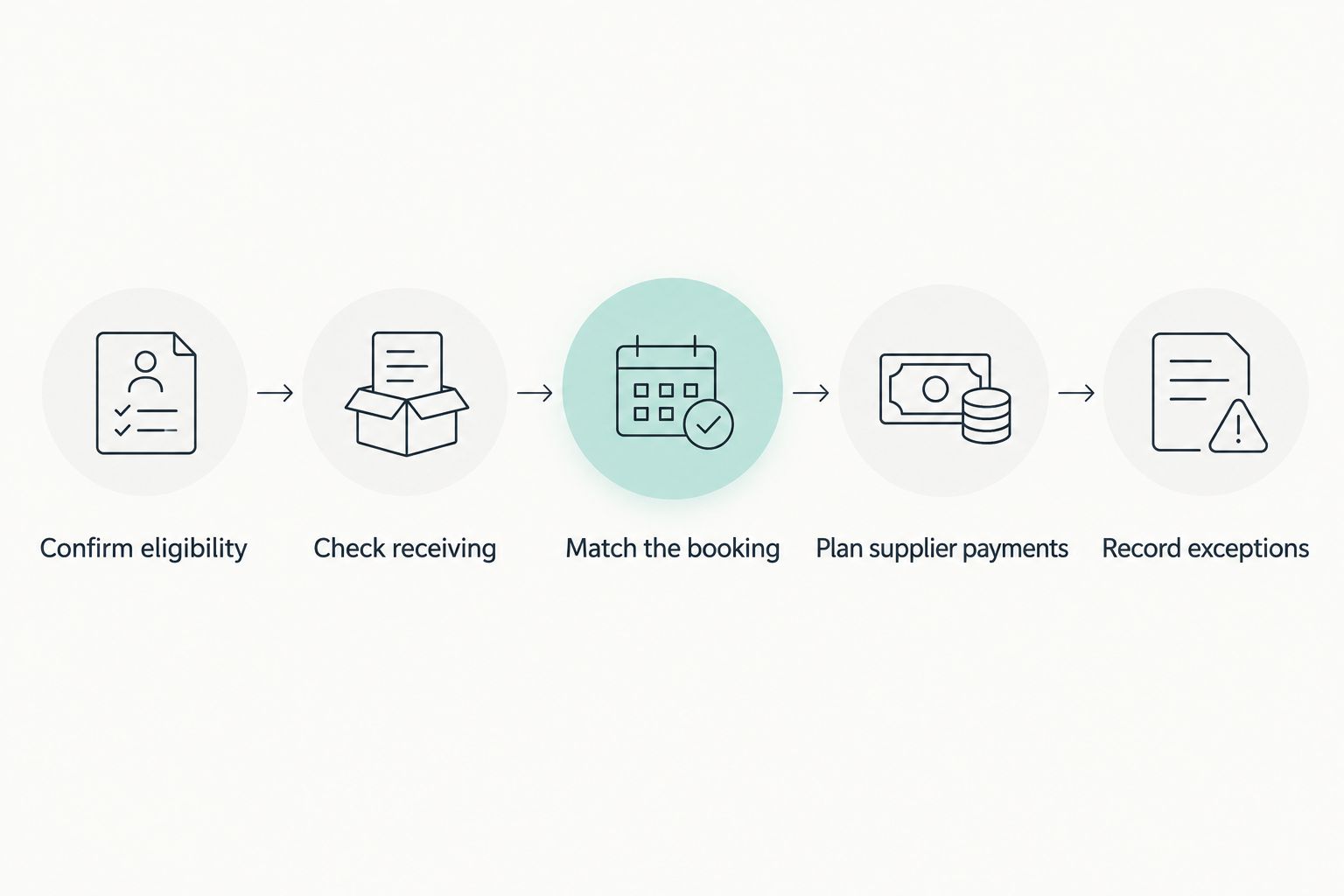
Before moving live export receipts, document the payment journey. For tourism businesses, use an overseas booking with a deposit, a later balance payment and local supplier obligations.
- Confirm eligibility. Apply using the correct legal entity and complete the provider’s verification process.
- Check receiving. Verify the currency, payer location, receiving details and permitted payment method.
- Match the booking. Decide how your team will connect incoming funds to the deposit or balance invoice.
- Plan supplier payments. Confirm the payout route and currency before committing money to suppliers.
- Record exceptions. Write down how staff should handle short payments, rejected transfers and refund requests.
Keep payment confirmation separate from booking confirmation. A guest’s message that a transfer was sent is not the same as a receipt in your business records. Define which account record your team uses before marking a deposit or balance as paid.
For your 2026 operating checklist, include the person responsible for verification, reconciliation and supplier approval. Assigning those responsibilities makes the account comparison useful beyond the application stage.
Start your business account application
Complete verification and confirm eligibility and payment routes before sharing receiving details.
Which account should you choose?
Start with the incoming payment and the next outgoing obligation. If you need USD and EUR receipts plus digital balance management, assess the named service subject to approval. If you need bank deposits or banking services, assess foreign-currency business banking instead.
Keep a local payment arrangement for verified domestic supplier needs, and retain card acceptance where customers require it. These options can serve different jobs; selecting one does not prove you can remove the others.
For a Kenyan exporter, the first decision is eligibility. For a South African tour operator or safari business, the same discipline applies: confirm your business, booking-payment methods and supplier routes before changing payment instructions.
FAQ
What's the best digital business account for Kenyan exporters?
The best account depends on confirmed Kenyan business eligibility, customer payment methods and supplier requirements. Zeam is an option to assess for USD and EUR receipts and digital money management, but Kenyan eligibility and the required routes must be confirmed.
Can a Kenyan exporter receive USD and EUR through Zeam?
Confirm Kenyan business eligibility and the required receiving routes before relying on Zeam. Its stated service lets African businesses receive USD and EUR from US and European clients using receiving details in the business’s name.
Is a digital business balance the same as a bank deposit?
No. A digital balance is not automatically a bank deposit, and Zeam explicitly states that it is not a bank and its balances are not bank deposits.
Should a tour operator use receiving details or card payments?
Use the payment method that fits the customer and the approved collection route. Receiving details and card acceptance serve different payment preferences, so confirm both before removing an existing option.
Does a payment link always let overseas guests pay by card?
No. A payment link describes how you request payment, not every payment method it supports. Check the underlying methods, currencies and payer-location restrictions.
What should I check before paying suppliers from overseas receipts?
Confirm the outgoing payment route, destination currency and supplier details before committing funds. Also check plan restrictions, approval controls and how the payment will be recorded.
Should I change customer payment instructions before verification?
No. Complete verification and confirm usable receiving details and the required payment route before issuing new instructions. Keep your existing approved collection process until the replacement is ready.
One last thing
Collecting the booking deposit is not the end of the payment decision. Before selecting an account, follow that deposit through to the supplier invoice it must fund. An account that receives the money but does not support the required next payment leaves a separate operational problem to solve.