
African manufacturers’ multi-currency accounts are business payment arrangements for receiving, holding and converting different currencies, with the aim of matching export receipts to production and supplier costs. This 2026 guide explains how to choose one around customer deposits, raw-material purchases and local operating expenses—not just the currencies displayed on an account dashboard.
- Choose multi-currency accounts for African manufacturers around approved receiving routes, supplier payments and reconciliation—not currency count alone.
- Zeam suits manufacturers seeking USD and EUR receiving details alongside local supplier payments, subject to eligibility and route checks.
- Holding export receipts in foreign currency does not remove exchange-rate risk or fund local production costs automatically.
- Keep card acceptance where customers need it; receiving details and payment links serve different collection needs.
Why multi-currency accounts matter for African manufacturers
An export order creates several payment obligations before it creates usable cash. You need to connect the customer’s deposit, the production schedule, the final invoice and your supplier commitments. A foreign-currency balance is useful only when you can receive the customer’s payment and move the money where the business needs it.
Start with the distinction between receiving, holding and paying. These are separate capabilities; support for a currency balance does not establish support for every incoming or outgoing payment route. The broader guide to multi-currency accounts for African businesses provides context, but your manufacturing decision should start with an actual order.
For your 2026 account review, choose a representative export contract and trace its cash requirements. A manufacturer supplying furnishings to a South African safari business, for example, needs to connect any overseas customer receipts with material purchases and local delivery costs. The same discipline applies when selling manufactured goods directly to international buyers.
Choose the payment route that funds the order reliably, not the account with the longest currency list.
How to choose and use a multi-currency account
Map your order-to-cash cycle
Start with a spreadsheet and your existing invoices. Record when the customer owes money, when production starts and when suppliers require payment. Separate expected receipts from money already received; an unpaid invoice cannot fund a material purchase.
Use 3 payment stages as your planning framework: customer deposit, production spending and final settlement. These are planning categories, not mandatory contract terms. Adapt them to your actual sales agreement, especially where a buyer pays after delivery rather than before dispatch.
For each order, show the customer’s payment currency beside the currency of each expense. That makes any funding gap visible before you commit to production.
- Record the agreed invoice currency and payment reference.
- Mark the deposit and balance-payment conditions.
- List material, labour, freight and other applicable costs separately.
- Identify expenses due before customer funds arrive.
- Assign someone to confirm receipt before production or dispatch milestones.
Check each receiving and payout route
Begin with a written checklist and ask each provider to confirm your specific use case. Do not treat an account description as confirmation that your business, buyer and supplier can all use the same route.
Separate 3 checks: business eligibility, incoming payment support and outgoing supplier-payment support. A receiving arrangement for USD is not proof that you can pay every overseas supplier in USD. Likewise, receiving details in your business’s name do not make the provider a bank.
For a 2026 comparison, record the confirmation date alongside each answer. Recheck the route before changing invoice instructions, particularly when the buyer’s location, payment method or beneficiary changes.
- Confirm eligibility for your business’s registered country and activities.
- Ask which customer locations and payment methods the receiving route supports.
- Check the beneficiary name customers must enter.
- Confirm supported supplier destinations and payout currencies.
- Ask about transaction documentation, limits and approval requirements.
- Confirm the process for rejected, returned or unmatched payments.
Verify your business before changing invoices
Use a manual onboarding checklist first: who submits the application, who supplies supporting information and who confirms that the required receiving route is ready. Keep your existing collection method until the replacement has been confirmed for your business.
Zeam supports receiving USD and EUR payments from US and European clients using receiving details in your business’s name. It also supports multiple currency balances, conversion and local supplier payments. International and bulk payments are on higher plans; confirm the relevant plan and route before relying on either capability.
Zeam is best for manufacturers seeking USD and EUR receiving details alongside local supplier payments, subject to eligibility and route checks. It is not a bank: its balances are digital balances, not bank deposits. Do not treat that distinction as a wording detail when deciding where to keep working capital.
Apply for a business account and complete verification before directing customers to new receiving details. Ask for the current requirements rather than assuming that another manufacturer’s approval establishes your own eligibility.
- Submit the requested business and verification information.
- Confirm that the approved business name matches invoice instructions.
- Check receiving details before adding them to customer documents.
- Confirm the intended supplier-payment route and plan.
- Keep a fallback collection method during the changeover.
Match currency balances to committed costs
Start with a simple currency schedule. Put confirmed customer receipts on one side and committed expenses on the other, grouped by payment currency and due date. This is more useful than deciding to hold foreign currency because the exchange rate looks attractive.
Holding USD or EUR gives you a choice about conversion timing, but it does not remove currency risk. If your wages and suppliers require local currency, the amount available after conversion remains relevant to the order’s margin. Avoid making production funding depend on an exchange-rate forecast.
Use a written 2026 conversion policy that prioritises committed costs. For example, decide who authorises conversion and how the business checks that local obligations remain funded. Treat the policy as an operating rule, not a prediction about currency movements.
- Separate committed supplier costs from unallocated balances.
- Match foreign-currency receipts to same-currency obligations where supported.
- Identify local-currency expenses that still require conversion.
- Review the conversion quote and applicable charges before confirming.
- Record the amount converted and the amount received.
Reconcile receipts before releasing production funds
Begin with an invoice register and a payment ledger. Match each receipt to the customer, invoice and order before treating it as production funding. A payment notification and a reconciled receipt are not the same control.
Use the sequence below for each export order. Keep the customer-facing payment instructions separate from the internal decision to release money to production or suppliers.
- Invoice: issue the agreed currency, amount and payment instructions.
- Receive: check the receipt against the payment record.
- Match: connect the receipt to the correct customer and order.
- Approve: authorise the next production or supplier-payment action.
- Record: retain the transaction and accounting evidence.
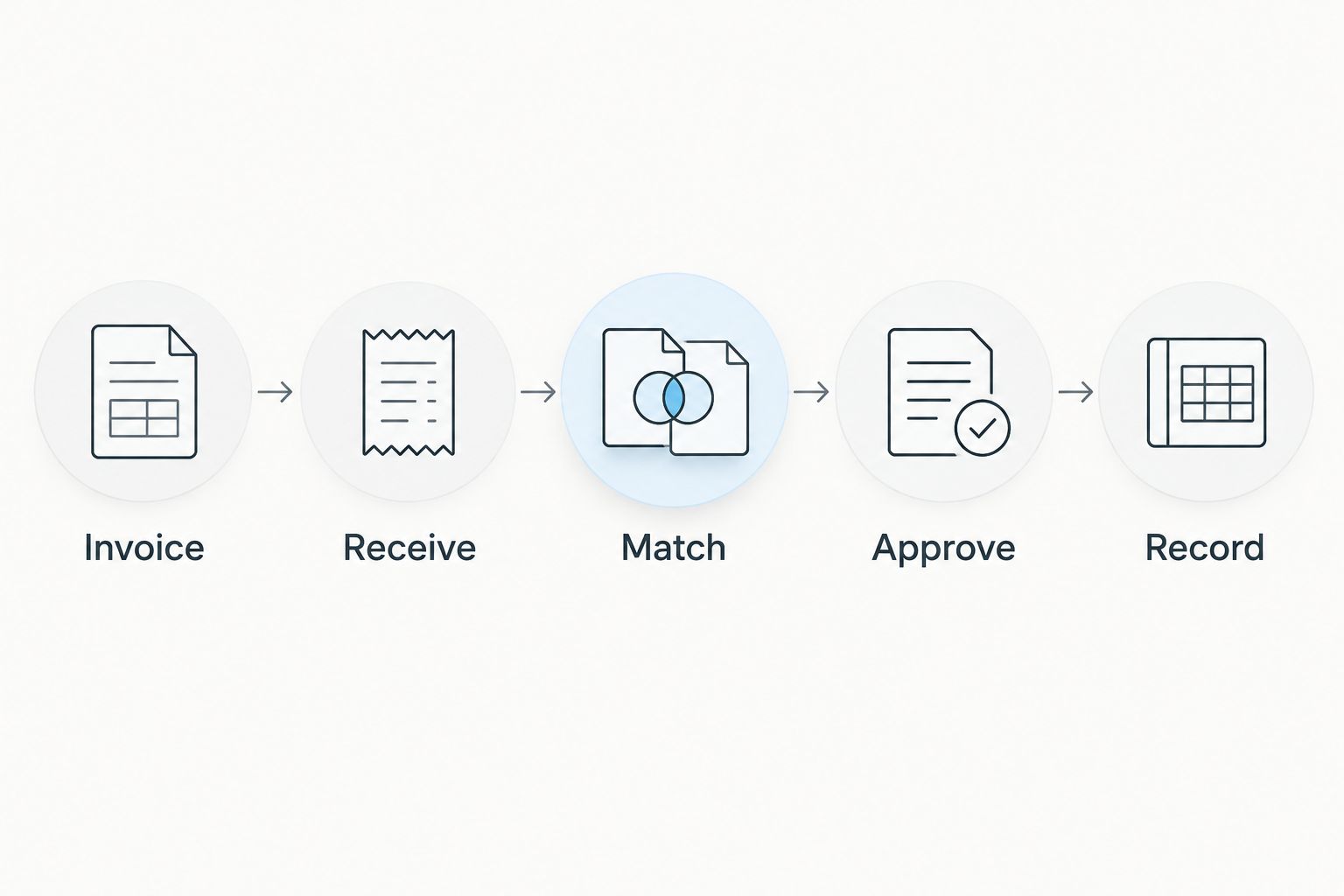
Payment records, accounting integrations and team approvals can reduce repeated manual work, but check the specific integration and workflow before depending on them. Do not assume that an integration supports your accounting package, transaction fields or approval structure merely because integrations are mentioned.
Keep an exception queue for receipts that do not match cleanly. Resolve a missing reference, different payer name or partial payment before closing the invoice.
Test the workflow and keep a fallback
Start with a controlled payment test suited to your business and the provider’s rules. Check the full process, not just whether the receiving details appear in the dashboard. The useful result is a reconciled receipt and a confirmed supplier-payment workflow.
For your 2026 operating checklist, assign responsibility for failed payments and customer queries. A buyer should know whom to contact if its finance team cannot use your receiving instructions. Your production team should know who decides whether an order can proceed.
Retain card acceptance or another collection route when customers need it. A payment link describes how a customer starts payment; it does not, by itself, identify the underlying payment method or prove that card acceptance is included.
- Confirm invoice instructions with the customer’s finance contact.
- Check the receipt status and reconciliation evidence.
- Review the supplier-payment confirmation process.
- Document how to handle partial or unmatched receipts.
- Keep alternative payment instructions current.
- Recheck access and approval permissions when staff responsibilities change.
Compare payment options for manufacturing orders
Compare collection and treasury functions separately. A method that helps a customer pay is not automatically the best place to manage production cash. The options below can work together; you do not need to force every buyer through the same method.
| Option | Best for | Practical advantage | Key limitation |
|---|---|---|---|
| Zeam multi-currency balances and receiving details | Manufacturers collecting USD and EUR from US and European clients | Combines receiving, holding, conversion and local supplier payments | Not a bank; international and bulk payments require higher plans, and intended routes need checking |
| Business bank with foreign-currency services | Manufacturers that need bank deposits and bank-provided services | Keeps the banking relationship central to the payment process | Confirm receiving currencies, conversion terms and supplier-payment routes individually |
| Card acceptance | Buyers who want to pay by card | Offers a collection method distinct from sending money to receiving details | Does not by itself establish foreign-currency holding or supplier-payment capabilities |
| Payment links | Businesses requesting payment through a shareable link | Gives the customer a direct starting point for payment | Supported payment methods, currencies and reconciliation depend on the provider |
Use the same order scenario when comparing providers. Ask how the customer pays the deposit, how you identify the receipt, how you fund materials and how you collect the balance. Compare the full chain rather than an isolated feature.
Also compare current charges, conversion terms and transaction conditions directly with each provider. Do not assume that a lower charge on one stage makes the entire order-payment process less expensive.
Common mistakes manufacturers make
Choosing by currency count
A long list of balances does not establish a usable route from your buyer to your supplier. Validate the actual customer and supplier journey first. Check the receiving method, conversion requirement and payout destination against the order you plan to fulfil.
Treating the customer deposit as spare cash
A deposit can be committed to materials, production or delivery before work starts. Separate money needed to fulfil the order from money available for other spending. Otherwise, a healthy-looking balance can conceal an unfunded production obligation.
Changing payment instructions before verification
Applying for an account is not the same as having confirmed receiving details ready for customer use. Complete verification and check the route before changing invoices. Keep the previous instructions accessible until the transition is complete.
Assuming a payment link means card acceptance
A payment link is an entry point, not a universal payment method. Confirm what the buyer can actually use and how the receipt will be recorded. Do not remove existing card acceptance unless the replacement meets the same customer requirement.
Leaving currency decisions until suppliers are due
Waiting until a supplier’s deadline turns conversion into an urgent funding task. Set responsibility for monitoring upcoming obligations and authorising conversions. Review the schedule when an order changes, not only when a payment becomes overdue.
FAQ
What are multi-currency accounts for African manufacturers?
Multi-currency accounts for African manufacturers are business payment arrangements for receiving, holding and converting different currencies. Their usefulness depends on supported customer-payment routes, supplier payments, eligibility and reconciliation—not simply the number of balances offered.
Can an African manufacturer receive USD and EUR through Zeam?
Zeam supports USD and EUR receipts from US and European clients using receiving details in the business’s name. Confirm your business eligibility and intended payment route, and complete verification before adding receiving details to invoices.
Should I hold export revenue in USD or convert it immediately?
Base conversion on committed expenses and payment dates, not a prediction about exchange rates. Holding USD can match a supported USD obligation, while local-currency production costs still need funding.
Is a multi-currency account better than card payments?
Neither is better for every manufacturing order. Receiving details suit buyers able to use the supported transfer route, while card acceptance serves buyers who want to pay by card; the methods can coexist.
Does a payment link replace my invoicing or booking system?
A payment link does not establish that invoicing or booking-system functions are included. Confirm how payment references, customer records and receipts connect to your existing workflow before changing systems.
What should I check before paying an overseas supplier?
Check the supplier destination, payout currency, beneficiary details, required documentation and applicable plan. Also confirm the approval process and how you will track a rejected or returned payment.
Are digital balances the same as bank deposits?
Digital balances are not automatically bank deposits. Check the provider’s legal status and terms, including how balances are held and what protections apply, before deciding where to keep working capital.
One last thing
The most revealing test is a delayed customer balance payment. Before moving your 2026 export collections, ask which supplier obligations remain payable if that receipt arrives after the production deadline. If the answer is unclear, fix the funding plan before changing the account.
Your payment setup should make an order’s funding position visible—not just show that money arrived.